
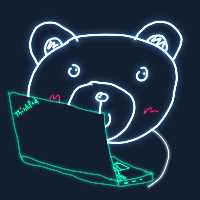
Twenty-something years ago, my primary school teacher told my parents to get me tested for ADHD. Twenty-something years later, I came back to Nanjing from Ireland and finally got my diagnosis.
It was St. Patrick's Day, 2023. The sound of drums and crowds drifted through the window, but I didn't look outside. I sat at my desk, staring at the assignment requirements on my screen, knowing the deadline was closing in, knowing what would happen if I kept putting it off. But hours passed, and I still hadn't written anything of substance. The festival outside had nothing to do with me.
I was absently picking at the skin on my hands when it occurred to me — a thread that had started more than twenty years ago had never really broken.
More than twenty years earlier, my primary school teacher had told my parents to get me tested for ADHD. I hadn't thought about it in years. But sitting in that rented room in Ireland, I finally recognised it for what it was: not the beginning of a story I'd since moved on from, but a line that had been running underneath everything, the whole time.
It was third grade.
My parents sat in the homeroom teacher's office, two adults facing a desk, the air conditioning humming overhead. The teacher said I was always inattentive in class, often didn't finish my homework, and had difficulty getting along with classmates. She suggested my parents take me to get tested for ADHD.
When I heard I was being taken to the Nanjing Brain Hospital, my first reaction was excitement. For me, the daily grind of classes, homework, and exams was unbearably dull — and now, finally, something different was happening.
I don't remember much of the assessment itself. I remember the doctor asking a lot of questions, having me complete what felt like games on a computer, and working through intelligence puzzles I found genuinely fun.
In the end, I wasn't diagnosed with ADHD. The doctor said I had something called "sensory integration dysfunction" and recommended sensory integration training.
My father didn't believe any of it. He thought the training was just a way to con people out of money. The matter was dropped, and I never received any further intervention.
But the problems that had sent me to the hospital in the first place didn't disappear along with it.
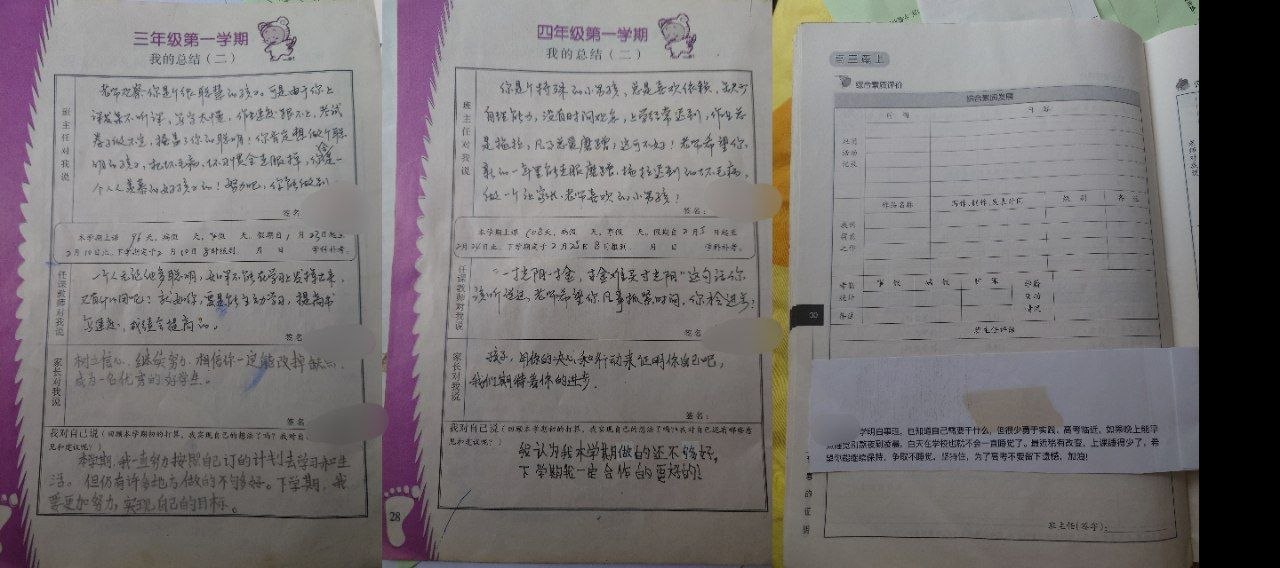
Many years later, when I began to seriously suspect I might have ADHD, I dug out my old primary school report comments like reopening a cold case. The teachers had written almost the same thing, year after year:
"You're a bright child, but you're always daydreaming in class. If you could just pay attention, you would surely become an outstanding student."
Teachers came and went, the wording changed slightly, but the meaning never did: clever, but unfocused; capable, but not applying that capability where it needed to go.
Eventually I accepted this explanation myself — the problem wasn't that I couldn't do it, it was that I wasn't trying hard enough, wasn't disciplined enough, wasn't serious enough.
It wasn't that I had no interest in learning. Quite the opposite — when I encountered something that genuinely interested me, I would follow it like clicking links on Wikipedia, chasing one question into the next. But learning requires not just understanding, but memorisation, repetition, and sustained practice. And what I found hardest was exactly that: the repetitive, tedious, long-term kind of effort.
When I started learning computer science, things seemed to improve for a while. Writing code had clear goals and immediate feedback — right or wrong, you knew instantly. Solving one problem naturally led to the next. That constant feedback loop made it easy to get absorbed.
I convinced myself that my past struggles had simply been because I didn't enjoy school subjects. It wasn't until I graduated and entered the workforce that I realised the problems hadn't gone away at all.
I could complete the development tasks assigned to me, but I couldn't live according to the company's schedule. During the day, sitting at my desk, I would sometimes avoid the work in front of me and quietly tinker with the Linux desktop environment on my own computer. At night, when I should have been sleeping, I would suddenly feel alert and start writing code.
The chronic late nights meant I was constantly arriving late and leaving early. Six months in, I was let go.
Afterwards, I applied for a master's programme in Ireland. But even the application process itself nearly fell apart. Messages from my agent would sit unread for days before I responded. Documents always needed chasing before I'd start on them. By the time I actually pushed the application forward, it was very late — too late to apply for the computer science programme I actually wanted, and I ended up in an electronics-related course instead.
A friend who came to Ireland with me couldn't understand it. They felt that whatever difficulties I was dealing with, not replying to messages was holding up other people's work. They were right.
At the time, I could only attribute it to procrastination, irresponsibility, or evidence that I hadn't really wanted to go abroad that badly. I still didn't understand why I kept stalling on things that were clearly important and not even that complicated.
I did eventually get the offer, but then got stuck on the language exam. I'd always struggled to memorise vocabulary. Open a word list, and my attention would drift almost immediately — not because the words were too hard, or because I didn't know how to study, but because I couldn't make myself sit there, repeating something tedious with very slow feedback.
I hadn't yet seriously connected any of this to ADHD. I stumbled onto the fact that large amounts of caffeine seemed to make it easier to start. So I bought five or six cases of Monster energy drinks from Chinese e-commerce sites and used them to force myself through vocabulary study.
Even so, I kept putting it off until 2022, when I finally sat the Duolingo exam with only a week or two to spare before my offer might have been withdrawn. I thought the hardest part was over.
I had no idea the real problem wasn't whether I could get to Ireland — it was whether I could keep my life together once I got there, without anyone to catch me if I fell.
Once I arrived, every external structure I'd relied on vanished at once.
Classes, cooking, laundry, assignments, emails, admin — everything required me to organise it myself. I quickly discovered I couldn't maintain any of it consistently. My room got messier and messier, my inbox filled up, assignments were always left to the last minute. Topics that interested me, I could spend hours on. Tasks I didn't care about, I could barely force myself to begin.
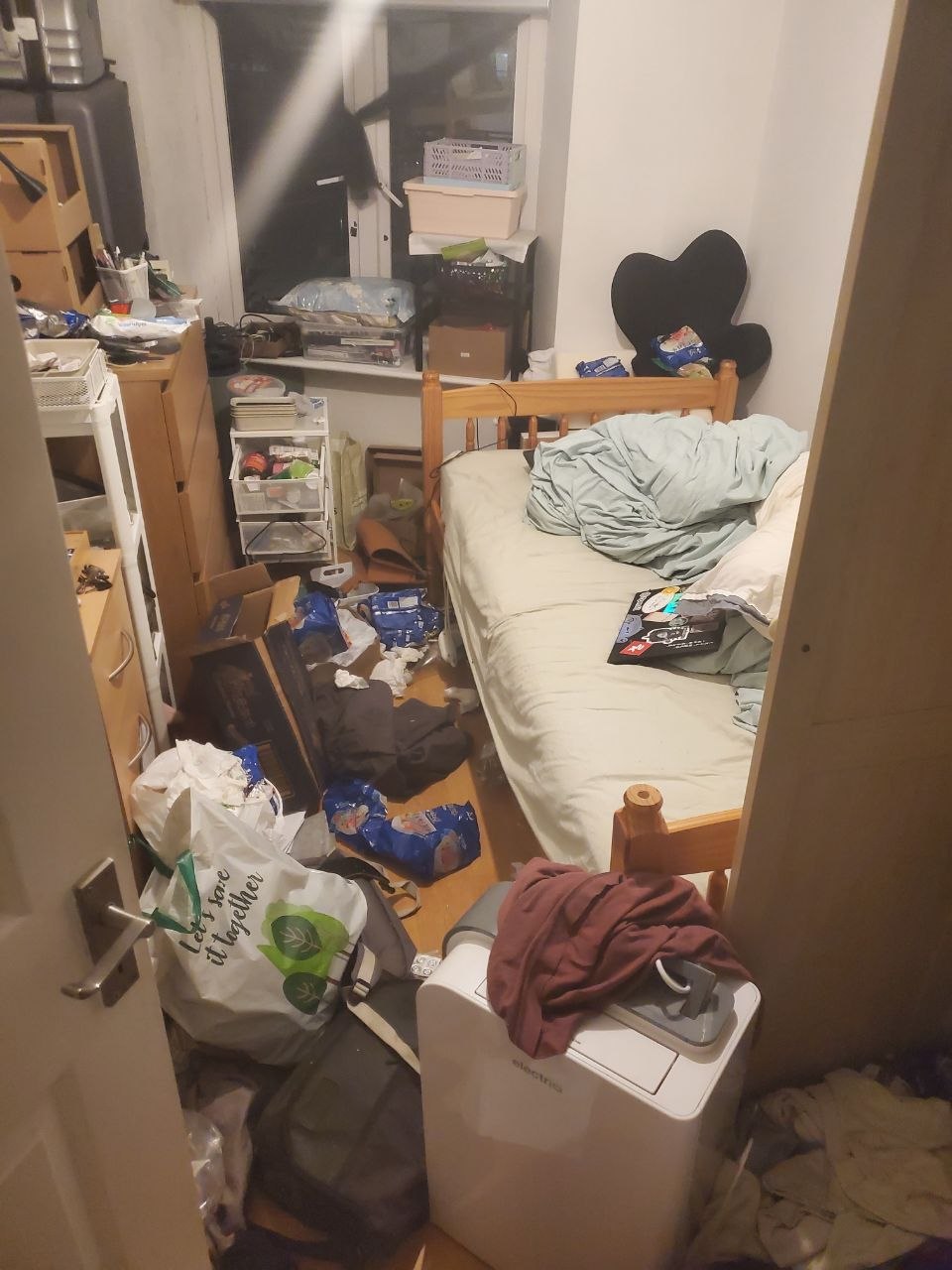
To be precise: apart from the first half of my first year, I almost never attended classes normally after that. Many were scheduled in the mornings, and I often simply couldn't get up. This sleep problem hadn't started with depression. Since primary school, I'd struggled to end the day when I was supposed to. No smartphone meant hiding under the covers reading novels; later it became scrolling endlessly until I physically couldn't stay awake.
The more classes I missed, the more assignments piled up, until even the idea of going back to class felt impossible.
The strangest part was this: I eventually completed my final project — the one I actually cared about — but never managed to hand in two or three coursework assignments. They weren't necessarily harder. Every time I opened the brief, I could understand it, I roughly knew what to do. But I would sit there, reading the same paragraph over and over, picking at my skin, switching to another tab, switching back. The cursor blinked in an empty document. I never really started. I knew the deadline was approaching. I knew what would happen if I missed it. But knowing the consequences didn't automatically translate into action.
It wasn't just my studies. I forgot things I'd promised to do, cancelled plans at the last minute, let things that needed handling drag on and on, and sometimes, not knowing how to face something, simply didn't reply at all. Friends I'd come to Ireland with gradually lost touch with me. Relationships were worn down, one disappointment at a time.
In early 2023, I was diagnosed with depression. That diagnosis wasn't wrong. I was genuinely low, felt hopeless about the future, and occasionally had some darker thoughts. Treatment worked quickly — the low mood, the hopelessness, most of the depressive symptoms lifted.
But the things that had actually made my life unliveable barely shifted at all.
Assignments still wouldn't start. Emails still sat unread. My sleep was still out of control. Things I'd promised people, I still forgot — and usually only realised when they asked. More importantly, I began to see that these problems hadn't started with the depression. They'd been there in primary school, at work, during the application process, and now here. Different forms, same pattern.
That was when I started to think: the depression might be real, but it isn't the whole answer.
By late 2023, I had begun seriously asking my university GP whether the problems that hadn't improved might be related to ADHD. The GP thought a formal assessment wasn't unreasonable. But in Ireland, this meant paying for a private evaluation — around €1,000 at the time. At the end of the email, the doctor asked a very practical question: could I afford it?
The answer was no.
I was already running over time on my degree, and rent and living costs had eaten far more than I'd planned. During the worst of the depression I'd rarely cooked, relying on takeaways and convenience stores, and my spending had spiralled. The assessment was shelved again.
By late 2024, the depression had largely settled, but the difficulty starting things remained severe. The university told me clearly: there was a two-year limit on extensions, and this would be my last chance.
In the final two months, I entered something close to a sprint. I caught up on nearly everything, and relearned almost a full year's worth of material in a very short time. My thesis, meanwhile, came out reasonably well. It was an LLM agent-based application for ADHD task decomposition. Writing it felt like fighting hand-to-hand with something I'd been up against my whole life. I stayed up many nights.
The same person who could work until the early hours on something that genuinely mattered to them, couldn't begin two or three assignments that were no harder. In the end, it was those unfinished assignments that meant I left with a Diploma rather than an MSc.
In the second half of my time in Ireland, I found part-time work at a supermarket. It gave me some income, but I kept making small mistakes — wrong change, missed items, failing to spot shoplifters. My manager didn't like me for it.
When my family stopped sending financial support, I was living on what I earned from one or two shifts a week, just barely covering rent and basic costs. My rent had already dropped from around €950 to around €800 a month after I moved to a smaller place. Even then, after rent and essentials, there was almost nothing left.
The university informed me that because of the outstanding assignments, I would receive a Diploma rather than a Master's degree. I still had the option to appeal.
I never did.
More precisely: at that point, I couldn't even bring myself to open my inbox.
I knew there were probably dozens of unread emails in there. I knew the deadline was sometime in October. I knew the longer I left it, the worse the consequences. But because it mattered so much, I became more and more afraid to look.
Everything was pressing in from every direction at once: rent due every month, medication running low and no new GP found yet, more shifts being added at work because staff had left, and the checkout itself was one of the hardest places for me to be — facing strangers, giving change, scanning items, handling complaints, all requiring me to switch attention quickly, which I do slowly, making mistakes constantly, and then replaying those mistakes in my head for hours afterwards.
Every time I thought about my inbox, I simultaneously thought about the appeal documents, the university deadline, the bills, the work schedule, and all the overdue replies. They knotted together into one tangled mass. As long as I didn't open it, I could at least pretend, for a little while, that none of it was happening.
The appeal required gathering materials, writing an email, explaining my situation, tracking the process — and I couldn't manage even the first step of opening my inbox. By the time I finally had the strength to face it, October was gone.
Around the same time, I was also running low on medication. Leaving the university system meant finding a community GP on my own. In Dublin, this isn't particularly difficult — but I simply didn't do it. Searching for a clinic, making a phone call, booking an appointment, explaining my history: none of it was complicated on its own, but together they were enough to keep me stalling indefinitely. It was only when a friend recommended a Mandarin-speaking GP that I finally found a way around all those steps I couldn't start, and actually made an appointment.
I explained my situation to this GP, and he quickly prescribed atomoxetine. I had assumed medication usually required a formal diagnosis first, so his willingness to prescribe surprised me.
The first few days on the medication brought something close to an unbelievable experience: when I thought of something I needed to do, I could seemingly just stand up and do it. That vast resistance between "I should do this" and "I'm actually doing it" temporarily disappeared. But it didn't last. Those days came with obvious physical agitation and irritability — I felt more like I was being pushed by that feeling than calmly gaining stable executive function.
At the supermarket, though, I did noticeably make fewer mistakes. Until the day I missed a message in the work group chat about a known shoplifter we were supposed to watch out for, and let the person walk out. It was exactly the kind of problem I'd always had: when information actually entered my attention, I could handle it reasonably well. But if I never opened that message — never completed the step of looking — then everything after it had no chance to happen either.
At the same time, I was trying to move forward with an adult ADHD assessment in Ireland. Private psychiatrists typically had waiting lists of around six months. I found one whose fee was around €900. Unlike two years earlier, when I'd first heard an assessment quoted at that price, this time I was completely certain: whatever it took, I was willing to pay. Because by this point, the diagnosis wasn't a nice-to-have explanation — it was part of whether I could continue living my life at all.
But even something I'd decided to do didn't go smoothly. The referral paperwork dragged from December of the previous year all the way to April. My GP often didn't reply to emails, and I didn't follow up consistently. Every nudge meant digging out the correspondence, confirming the process, composing a message, and facing the possibility of another non-response. So an already slow system was stretched even longer by the doctor's delays and my own difficulty executing.
By the time the referral finally came through, I was booked for around June. Then, just as my slot was approaching, I received an email: by then, the full assessment and follow-up process would cost around €1500.
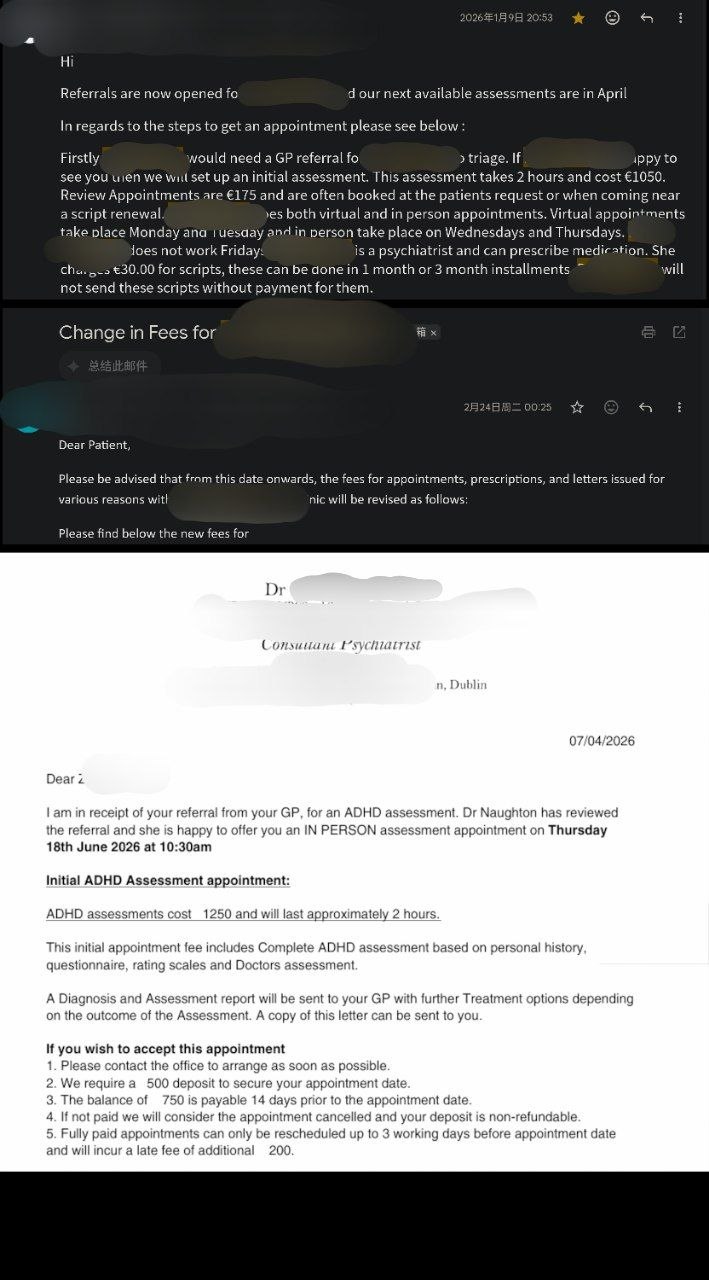
I was shocked — not because I didn't know healthcare in Ireland was expensive, but because I had waited so long and steeled myself to pay whatever it cost. And then, just as I was almost at the finish line, the bar was raised again. I was surviving on scattered supermarket shifts, and after rent and basics, I typically had €400 or €500 left. €1500 meant months with no room for anything unexpected.
But the fee wasn't really what made me start thinking about going home.
Around that time, my relationship also ended. She had watched, for a long time, as I kept putting off things I should have handled: my studies, job applications, medical appointments, everyday life. Nothing broke in a single argument — it had worn down through accumulated disappointment. She no longer believed I was capable of looking after myself, and no longer believed that if she just kept waiting, things would eventually get better on their own.
That relationship had been one of the main reasons I'd stayed in Ireland. She was my favourite person. I've thought about it more than once — if I had managed to get myself sorted earlier, would things have turned out differently? After we broke up, that reason was gone.
Staying meant paying high rent while waiting for a diagnosis I might not be able to afford. So I began seriously considering another path: going back to Nanjing.
More than twenty years ago, my mother had taken me to the Nanjing Brain Hospital because a teacher suspected ADHD. Twenty-something years later, I decided to go back to the same place and ask that unanswered question again.
Back in Nanjing, I started looking into adult ADHD diagnosis options in China. My main sources were Zhihu, Xiaohongshu, and Google, and I found a nationwide map of hospitals that could diagnose adult ADHD, compiled by a mental health advocacy group. This confirmed that going back to Nanjing wasn't a long shot — it was a real path.
An ADHD diagnosis can't rest on "I feel like I might have it." It requires demonstrating that the relevant difficulties have existed since childhood and have had a long-term impact on learning, work, and daily life. So this time, I didn't go alone.
I brought my mother. I also dug out my primary school report comments. The original records from my visit to the Nanjing Brain Hospital more than twenty years ago still existed somewhere, but I forgot to bring them that day. My mother, though, still remembered everything: how homework would drag on until late at night, why the teacher had recommended testing for ADHD, and why we had never continued with the sensory integration training afterwards.
Getting an appointment wasn't easy. The relevant clinic had very limited slots, open mainly on Saturdays, with appointments needing to be booked in advance. The initial consultation went more smoothly than I'd expected — probably because my childhood evidence was fairly complete, my mother could fill in the history, and the doctor moved through the questions and ordered follow-up assessments without much hesitation.
The harder part was the parent interview. I was initially booked for two weeks out. To move things forward, I called the department every few days to ask if anyone had cancelled. Eventually, someone did, and my appointment moved up by nearly two weeks.
The interview lasted somewhere between fifteen and thirty minutes. The doctor worked through a form, asking about symptoms and specifics one by one. I'd say something; my mother would add to it. She talked about how I couldn't finish homework as a child, how it would drag on until midnight, why the teacher had originally suggested bringing me in. The inattentive symptoms — almost all of them applied to me. The hyperactive and impulsive ones, less so. I was never the child who couldn't sit still or ran around. What had genuinely affected me, over and over, was the drifting attention, the forgetting, the avoidance, the chaotic sense of time, and that first step I could never quite take.
The computerised attention test results were worse than I'd expected. I'd done similar tests as a child, and I've wondered since whether the novelty of it back then had kept me more engaged. This time, my scores were genuinely low — low enough to surprise even me.
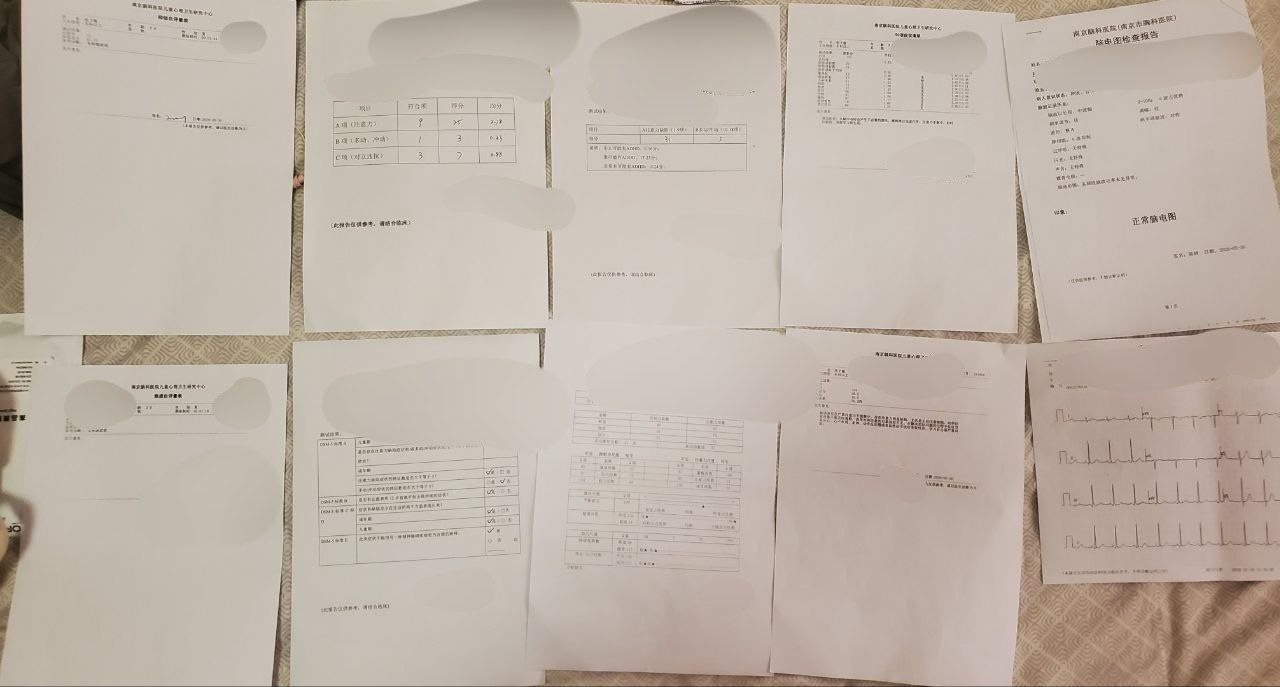
After all the assessments and interviews were complete, my mother and I went back to wait outside the child psychiatry department.
The waiting area was almost entirely children. I was the only person close to thirty sitting among them. The chairs were those light-blue plastic ones joined in rows. A small child was running back and forth on the floor nearby; another was crying while a parent murmured softly. I didn't know what to do with my hands and feet, so I kept picking at the skin on my hands and tapping my foot on the ground.
I said quietly to my mother that it felt a bit strange, sitting here.
She glanced at me and said: "It's okay."
I didn't say anything back. I'm not sure what I would have said.
More than twenty years ago, she had brought me to sit in some waiting area in this same hospital, waiting for a conclusion that never came. I was a child then, and thought coming to a hospital for a check-up was something new and interesting. Now I was nearly thirty, sitting among children, waiting for the answer to the same question. And she was still sitting beside me.
The day the diagnosis was confirmed wasn't marked by a long conversation. The doctor was very busy; people were lined up outside the door. When my name was called, we went in and sat down. The doctor flipped through the reports, half to herself, reading numbers aloud. On one page, she paused, circled something with her pen, and said: generally, adults can score at least 85.
I looked at the circled number.
I didn't get to ask very much.
Honestly, I hadn't really considered the possibility of not getting the diagnosis before walking through that door. I had read too much, had spent too long asking various AIs to poke holes in my account of myself, to prove I didn't have ADHD. They couldn't.
So when the diagnosis came, what I felt wasn't relief or surprise. It was a quiet, settled feeling — the feeling of having finally finished something. The diagnosis wasn't the end of an answer. It was the key that had opened a lock.

After the diagnosis, the doctor prescribed methylphenidate. So far, the changes haven't been as dramatic as some accounts I've read online. I can sense a mild improvement with initiation — a feeling a bit like what large amounts of caffeine used to do, making the resistance in my head slightly thinner, but more stable, with far fewer side effects. As for focus itself, the subjective improvement has actually been less noticeable than what I experienced with atomoxetine and bupropion in Ireland. That combination felt more noticeable than what I have now.
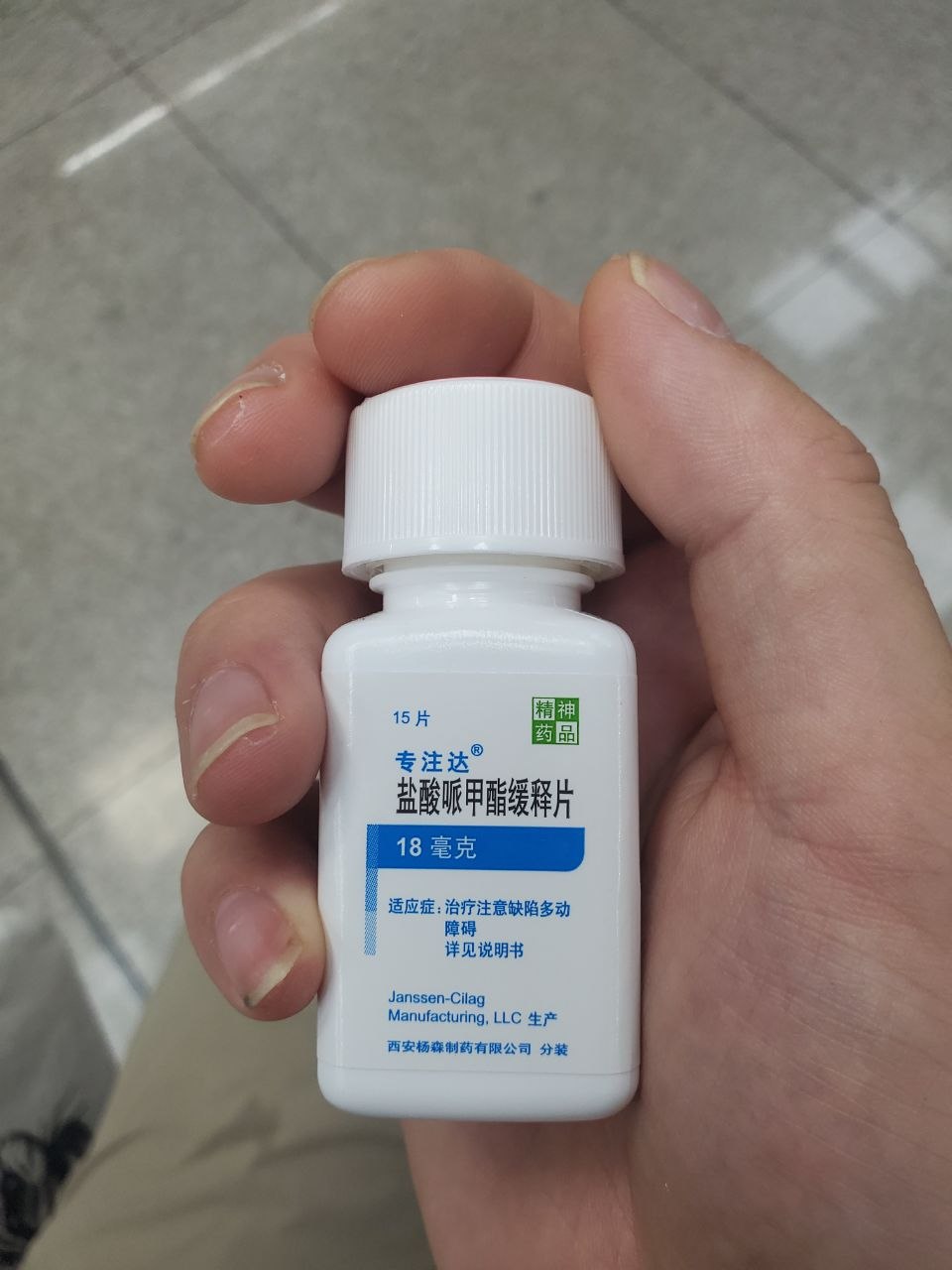
This doesn't mean the medication isn't working for me. I'm still at a low dose, still in the adjustment phase. More importantly, I no longer expect a single pill to undo twenty-something years of accumulated difficulty. Medication can reduce resistance, but it can't redo my master's degree, can't recover the appeal deadline I missed, can't restore what has already ended. It's more like finally being given a slightly fairer starting point.
After the diagnosis, it's been hard not to think about what another life might have looked like. If I had known earlier what the problem was, I might not have lost my first job to lateness. I might not have spent four years on a one-year master's programme. I might not have lost a degree I'd actually completed because of a handful of assignments I could never start.
Harder still is knowing that the relationships worn down by years of delays, broken plans, and chaos won't be restored by a piece of paper. If I had known earlier, maybe I could have got myself together sooner. Maybe she wouldn't have had to carry so much. ADHD can help me understand the past, but it doesn't absolve me, and it doesn't undo the harm others experienced.
I did miss a lot.
But the diagnosis isn't a stamp of explanation on every past failure, and it isn't a declaration that my life has been determined by a condition. It's more like finally having an accurate map. I know now that my hardest things aren't understanding complex problems — they're starting, switching, sustaining, and finishing. And I know that self-criticism alone can't solve those problems.
The medication is still being adjusted. Life hasn't suddenly rebooted. But at least I can finally start again using methods that actually fit.
More than twenty years ago, my mother took me by the hand into the Nanjing Brain Hospital. Neither of us knew, then, how far that question would follow me.
Twenty-something years later, we walked out of the same door together.
This piece is a personal account only and does not constitute medical advice. The behaviours mentioned — consuming large amounts of energy drinks, using prescription medication without a formal diagnosis, and the subjective drug experiences described — were personal decisions made under specific circumstances and carry serious health risks. Please do not replicate them. ADHD diagnosis and medication are highly individual and must be managed under the guidance of a psychiatrist. The effects and risks of different medications vary enormously from person to person. Do not obtain or take medication without proper medical supervision. If you are struggling with similar difficulties, please seek help from a qualified medical professional.